There is a particular kind of cold that homeowners in older Leicester and Birmingham terraces know well. The heating has been on for hours, the thermostat says the house is warm, but the walls still feel cold to the touch and the rooms never quite settle. Energy bills climb every winter and nothing seems to explain why. The answer, almost always, is in the walls.
Around one third of UK homes have solid walls with no insulation, and solid walls alone can account for up to 45% of a home’s total heat loss. For the millions of homeowners living in properties built before 1920, which includes the vast majority of Victorian and Edwardian terraces, semis, and cottages across the Midlands, solid wall insulation via an External Wall Insulation system is the single most effective retrofit measure available.
The Energy Saving Trust estimates that EWI can save a detached house owner up to £550 per year on energy bills, and up to £330 for a semi-detached, based on November 2025 fuel prices. Costs for a full EWI installation typically range from £8,000 to £22,000 depending on property size, with a typical semi-detached falling between £11,000 and £13,000.
At Advanced Wall Protection Ltd, working with homeowners across Leicester, Leicestershire, Birmingham, and the wider Midlands every week, this is work that genuinely transforms how homes perform. Here is everything you need to know before making a decision.
What Are Solid Walls and Why Do They Lose So Much Heat?
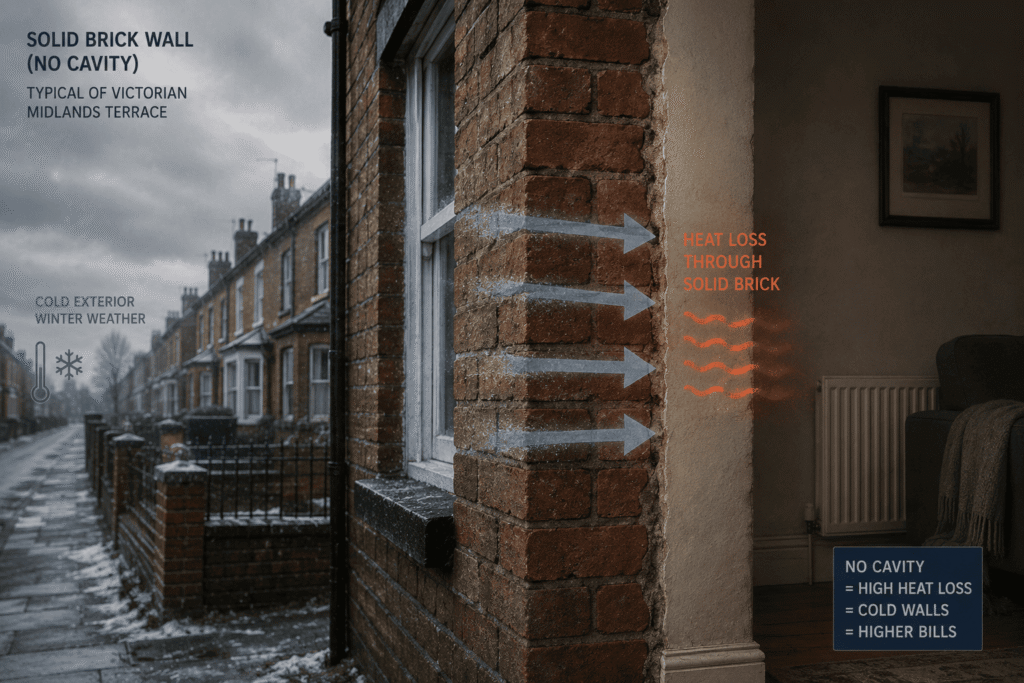
Homes built before 1920 were constructed with solid walls, a single continuous layer of brick or stone with no cavity running through the middle. Unlike the cavity wall construction that became standard from the 1920s onwards, there is no gap to inject insulation into. Heat simply passes through the wall and out into the cold air outside, and there is nothing to slow it down unless insulation is added deliberately.
Solid walled properties are everywhere across the Midlands. Victorian terraces in Leicester city centre, Edwardian semis in Solihull, pre-war cottages across rural Leicestershire. If your home was built before 1920 and you have never had insulation added to the exterior walls, it is almost certainly losing a significant portion of its heat through the walls every single day.
External vs Internal: Why EWI Wins for Most Homeowners
There are two ways to insulate a solid wall. Internal Wall Insulation adds the insulating layer inside the property, which means emptying rooms, losing floor space, and living through significant disruption during installation. In a typical terraced house, internal insulation can reduce the usable floor area noticeably across every affected room.
External Wall Insulation does the same job from the outside. No rooms are emptied, no internal disruption, no reduction in living space. The insulation layer goes onto the exterior of the building, finished with a protective render or cladding, and the work is done entirely from scaffolding. EWI also carries a lower risk of thermal bridging compared to internal systems, and it gives the property an exterior facelift at the same time, which matters when it comes to both kerb appeal and EPC ratings.
How External Wall Insulation Actually Works
The System Components
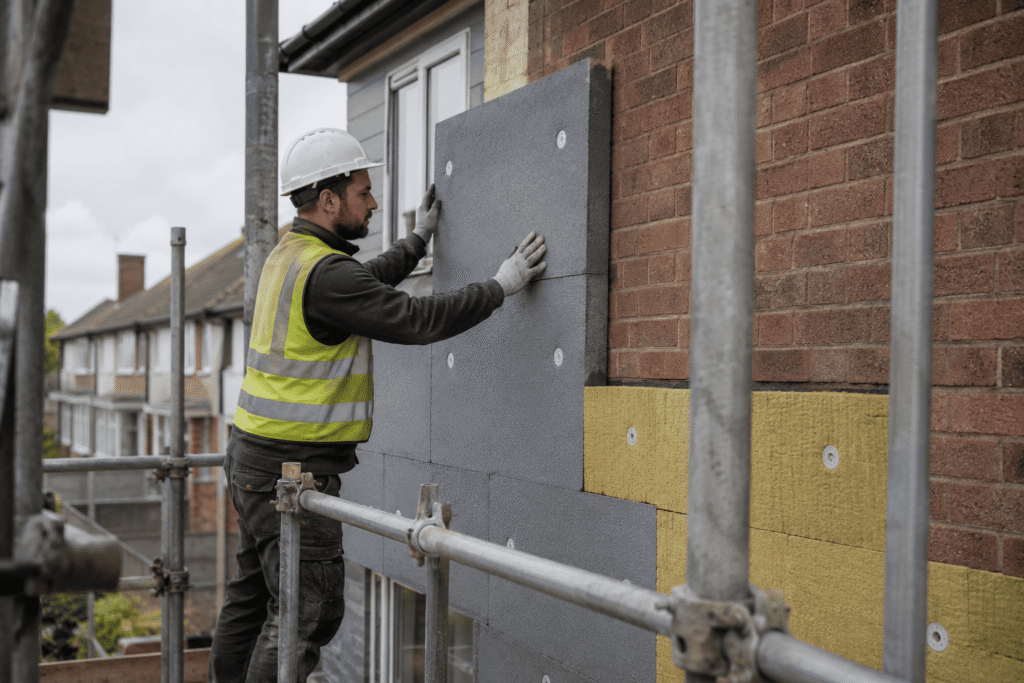
A professionally installed EWI system is made up of several layers working together. Insulation boards are fixed to the exterior wall surface using a combination of adhesive and mechanical fixings. The most common materials are mineral wool boards such as Rockwool Frontrock Super, chosen for their breathability and fire resistance, and phenolic foam boards such as Kingspan Kooltherm K5, which offer very high thermal performance at a thinner profile.
Once the boards are fixed, a base coat is applied over the surface with a reinforcing fibreglass mesh embedded within it. This mesh layer is what gives the system its crack resistance and structural integrity. A final render or decorative finish is then applied on top to complete the system and protect everything beneath it from the weather.
The Thickness Question
EWI adds between 50mm and 130mm to the external thickness of the building depending on the insulation material and the target thermal performance. This means window sills, eaves, and downpipes all need to be extended or adjusted to accommodate the new thickness. Externally mounted features such as drainage pipes, outside lighting, canopies, and garden planting near the base of the wall all need to be relocated or remounted carefully.
Meticulous detailing around junctions, window reveals, door frames, and any openings in the wall is absolutely critical. These are the points where water ingress happens if the work is rushed or poorly executed, and getting them right is what separates a system that performs for 25 years from one that causes problems within five.
Choosing the Right Render Finish
The render finish on top of the EWI system is not just cosmetic. It is the first line of defence against rain, frost, UV damage, and everything else the Midlands weather throws at a building.
Silicone render is the most popular modern choice. It is self-cleaning, breathable, crack-resistant, and built to last between 15 and 30 years depending on exposure. For traditional and heritage properties, lime render is strongly preferred over cement because of its natural breathability and flexibility. Lime allows the wall to behave as it was designed to, absorbing and releasing moisture naturally without trapping it. Cement render on a solid wall can do exactly the opposite and create the damp and condensation problems the EWI was installed to solve.
Brick slips, timber cladding, and composite finishes are also available for homeowners who want a specific aesthetic or need to match the character of the surrounding street.
The Real Benefits: More Than Just Lower Bills
The headline benefit of solid wall insulation is energy efficiency, and it is a significant one. But the full picture goes considerably further than that.
- Energy Efficiency and Lower Heating BillsReducing heat loss through walls by up to 45% has an immediate and measurable impact on energy bills. The EPC rating of the property improves, which matters to buyers, mortgage lenders, and anyone planning to sell in the next few years. For homeowners across Birmingham and Leicester paying high gas bills through long Midlands winters, the payback on EWI investment typically comes within 5 to 8 years through energy savings alone.
- Damp, Condensation, and Mould PreventionThis is the benefit that catches many homeowners by surprise. Condensation and mould on internal walls are not just an aesthetic problem. They are a symptom of cold wall surfaces, which is exactly what uninsulated solid walls produce during winter. EWI eliminates those cold surfaces by keeping the wall itself warmer. Combined with breathable render systems that allow moisture to move naturally through the wall, it solves condensation problems at source rather than treating the symptoms with paint or ventilation alone.
- Weather Protection and Long-Term Property ProtectionA well-installed EWI system creates a robust, waterproof outer layer that protects the underlying brickwork from everything the British climate delivers. Rain penetration, frost damage, UV degradation, and freeze-thaw cycles that gradually break down unprotected masonry are all addressed in one project. The lifespan of the exterior wall extends significantly as a result.
- A Complete Exterior TransformationBecause the entire outer face of the building is being worked on, EWI also gives homeowners the opportunity to completely change how their property looks. Modern silicone render finishes, breathable mineral coatings, or brick slip systems all sit beautifully over an EWI installation, and none of it requires a single room inside to be touched.
How Much Could You Save on Energy Bills?
The table below shows estimated annual savings based on Energy Saving Trust figures using fuel prices from November 2025, applied to gas-heated homes across different property types.
| Property Type | Estimated Annual Energy Bill Saving | Annual CO2 Saving |
| Detached house | £550 | 2,100 kg |
| Semi-detached house | £330 | 1,200 kg |
| Mid-terraced house | £190 | 700 kg |
| Bungalow | £250 | 900 kg |
| Flat | £150 | 550 kg |
Actual savings will vary depending on the property’s existing insulation levels, heating system, and how the home is used day to day. A free survey from Advanced Wall Protection Ltd gives Midlands homeowners a realistic, property-specific picture of what they could expect to save.
What the Installation Process Actually Looks Like
Understanding what is involved from start to finish removes uncertainty and helps homeowners plan properly around the project.
- Before Any Work BeginsThe condition of the exterior walls has to be right before insulation boards go anywhere near them. Walls must be structurally sound and free from active damp. A thorough assessment including damp readings and a close inspection of the substrate comes first. Any remedial work, whether that is treating damp, repointing, or repairing damaged masonry, is carried out before installation begins. Planning permission is also checked at this stage. Most EWI projects fall under permitted development rights, but conservation areas, listed buildings, and certain designated zones in Leicester and Birmingham require a planning application before work can start.
- The Installation ItselfInsulation boards, typically mineral wool or phenolic foam depending on the required performance and budget, are fixed to the prepared wall face using a combination of adhesive and mechanical fixings. A base coat is then applied over the boards with mesh reinforcement embedded into it, which provides the crack resistance that makes the system durable over the long term.The final render or decorative finish goes on last. Silicone render is the premium choice for low maintenance and self-cleaning performance. Breathable lime render is preferred for traditional solid wall properties where the wall needs to continue managing moisture naturally. For properties in conservation areas, specialist finishes that match local character are used.
Meticulous detailing around window openings, door frames, junctions, and the base of the wall is what separates an installation that performs well for decades from one that develops problems within a few years. Water ingress at these points is the most common cause of EWI failure, and it is entirely preventable with the right approach.
Externally mounted services including drainage pipes, external lighting, canopies, and satellite dishes all need to be temporarily relocated during installation and remounted cleanly at the correct depth once the new surface is in place.
- Why the Installer Makes All the Difference
This is not a job where cutting corners saves money in the long run. Poorly installed EWI traps moisture inside the wall structure, causes condensation, creates cold bridges, and can lead to damp and mould problems that are significantly more expensive to resolve than the original installation would have cost to do properly.Vapour permeable materials are not optional, they are essential. External moisture barriers that seal the wall completely must be avoided because they prevent moisture gathered internally from escaping. Ventilation within the home needs to be considered as part of the overall picture. And the competence of the team carrying out the work determines everything.Advanced Wall Protection Ltd uses qualified, experienced installers across every project in Leicester, Leicestershire, Birmingham, and the Midlands, with no subcontracting at any stage of the job.
The Complete Exterior Protection Package
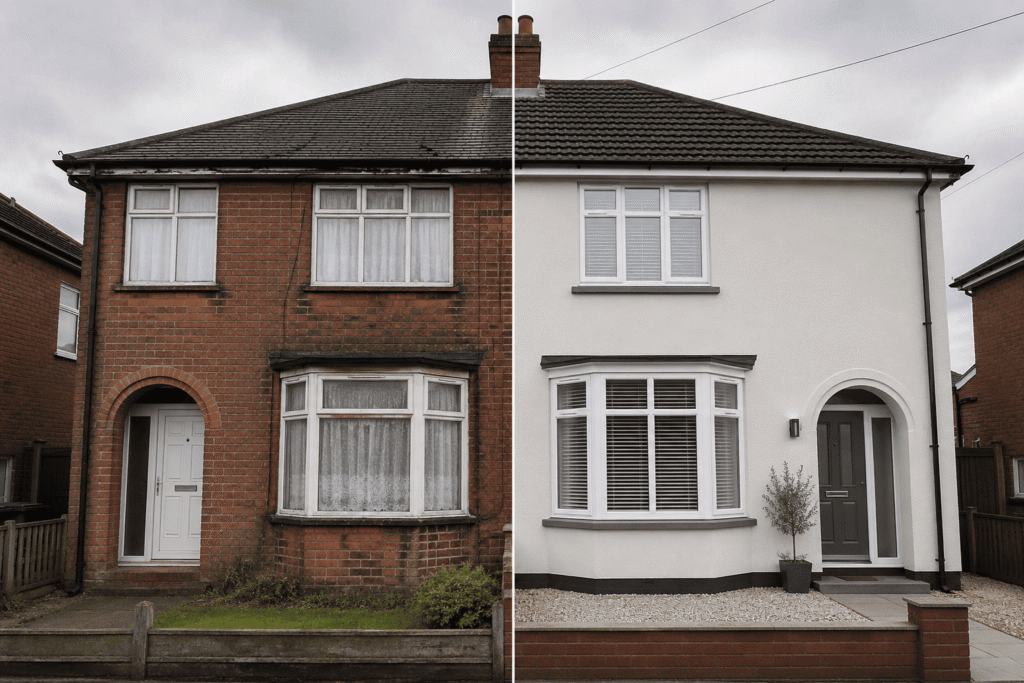
EWI is the core measure for solid wall properties, but the most effective and long-lasting projects combine it with a complete approach to exterior protection.
Roof coatings are worth addressing at the same time. Heat saved through well-insulated walls can still escape through a poorly protected roof, and frost damage or slow moisture ingress at roof level undermines the gains made below. Dealing with both in a single project is more cost effective and gives the property complete weatherproofing from top to bottom.
UPVC doors and windows need consideration where the added thickness of EWI requires new window reveals, sills, and trims. A freshly insulated and rendered exterior paired with quality UPVC doors and windows presents a complete, well-maintained finish that buyers and valuers notice immediately.
Internal plastering sometimes becomes necessary after EWI projects, particularly in rooms where condensation or damp has affected internal walls over the years prior to installation. Resolving those internal surfaces completes the job properly rather than leaving visible evidence of old problems behind.
And then there are guarantees. A written workmanship guarantee gives homeowners and future buyers documented confidence that the work was carried out to a professional standard and that it is backed up if anything goes wrong. Manufacturer approved installer status adds independent product warranties on top of that, creating a layer of protection that simply does not exist with unaccredited work.
A free survey from Advanced Wall Protection Ltd is the right starting point. No obligation, no pressure, just an honest assessment of what the property needs, what it will cost, and what the realistic return looks like in energy savings and property value.
The Bottom Line
For homeowners in Leicester, Leicestershire, Birmingham, and across the Midlands living in pre-1920 solid wall properties, external wall insulation is the single most impactful upgrade available. It addresses heat loss, damp, condensation, mold, and weather protection in one project, transforms the exterior appearance of the home, and delivers measurable energy savings year after year without touching a single room inside.
The difference between an EWI project that performs for 25 years and one that causes problems within five comes down entirely to the quality of the assessment, the materials chosen, and the skill of the team doing the work.
Get in touch with Advanced Wall Protection Ltd today to book your free survey and find out exactly what your property could achieve.
Frequently Asked Questions
1. What is solid wall insulation and does a house need it?
Solid wall insulation is an external insulating layer added to homes without cavity walls, commonly properties built before 1920. It helps reduce heat loss, improve indoor comfort, and lower heating costs significantly.
2. How much does external wall insulation cost in Leicester or Birmingham?
External wall insulation usually costs between £8,000 and £22,000 depending on property size, insulation system, render finish, and any repair work required. A typical semi-detached property in the Midlands often falls between £11,000 and £13,000. Homeowners can request a tailored assessment from Advanced Wall Protection Ltd.
3. Can solid wall insulation help prevent damp and mold?
Yes. Properly installed breathable EWI systems help reduce condensation by keeping internal wall surfaces warmer while also protecting exterior walls from rain penetration and moisture ingress.
4. Is planning permission required for external wall insulation?
In many cases, no. However, listed buildings, conservation areas, and some protected zones may require planning approval before installation begins.
5. How much can heating bills be reduced with solid wall insulation?
Savings vary by property type and energy usage, but detached homes may save up to around £550 annually, while semi-detached and terraced properties can also see meaningful reductions in heating costs alongside improved energy efficiency.