
Short answer: yes, rendering can add genuine value to your house, and in many cases the increase is substantial. A professionally rendered exterior not only refreshes the appearance of a property but also improves its perceived quality, making it more attractive to potential buyers. Industry estimates suggest that high quality rendering can increase a home’s market value by between 2% and 10%, depending on factors such as the finish, the age and condition of the building, local demand, and the overall standard of the installation.
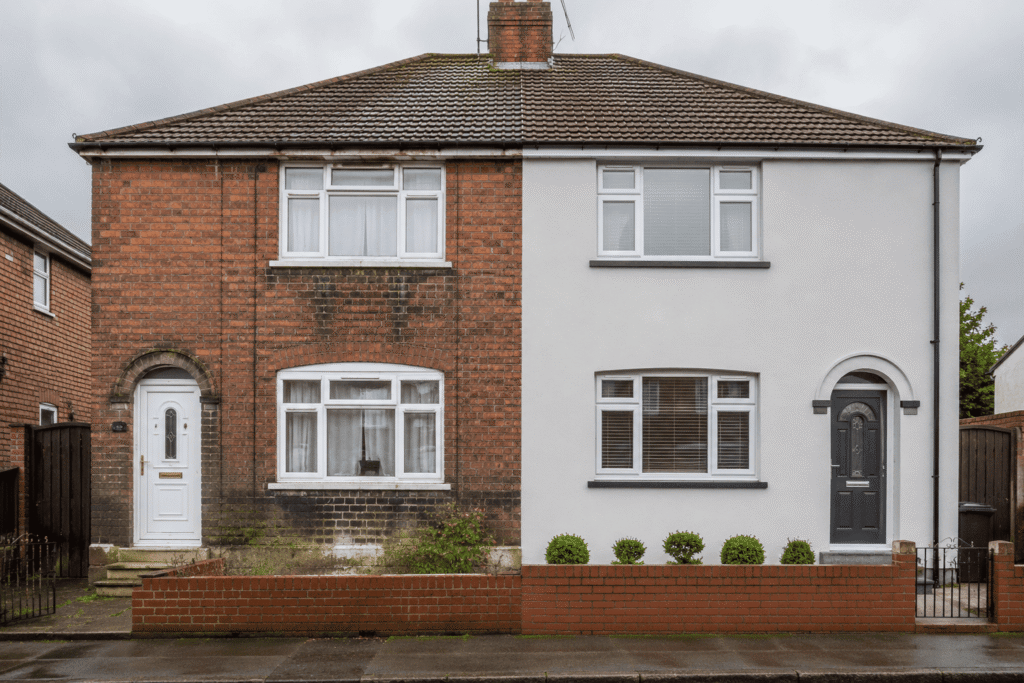
For example, on a property valued at £250,000 in areas such as Leicester or Birmingham, that could translate into an increase of approximately £5,000 to £25,000. Beyond the financial return, rendering can also help a home sell more quickly by creating a stronger first impression and improving kerb appeal.
However, the outcome depends heavily on the quality of workmanship and the suitability of the chosen render system. Poor preparation, incorrect application, or low quality materials can lead to cracking, staining, or moisture issues that reduce rather than increase value. Choosing the right rendering solution and an experienced installer ensures the investment enhances both the appearance and long term performance of the property while maximising its resale potential.
What Does Rendering Actually Do to a Property?
It Changes the First Impression Immediately
Kerb appeal is not a buzzword. It is the single biggest factor in whether a buyer walks through the front door or keeps driving. Research consistently shows that buyers form an opinion about a property within seconds of seeing it, and the exterior finish plays a huge role in that snap judgement.
Think of a 1970s semi-detached in Leicester with patchy exposed brick, weathered mortar joints, and a tired pebbledash finish. Now picture the same house with a clean, smooth silicone render in a contemporary warm grey. Same floor plan, same garden, same location. Completely different first impression, and a very different buyer conversation.
A professionally rendered exterior modernises dated brickwork, gives the property a clean and cohesive look, and immediately signals to buyers that the home has been cared for. That perception translates directly into confidence, and confidence translates into stronger offers.
It Does More Than Look Good
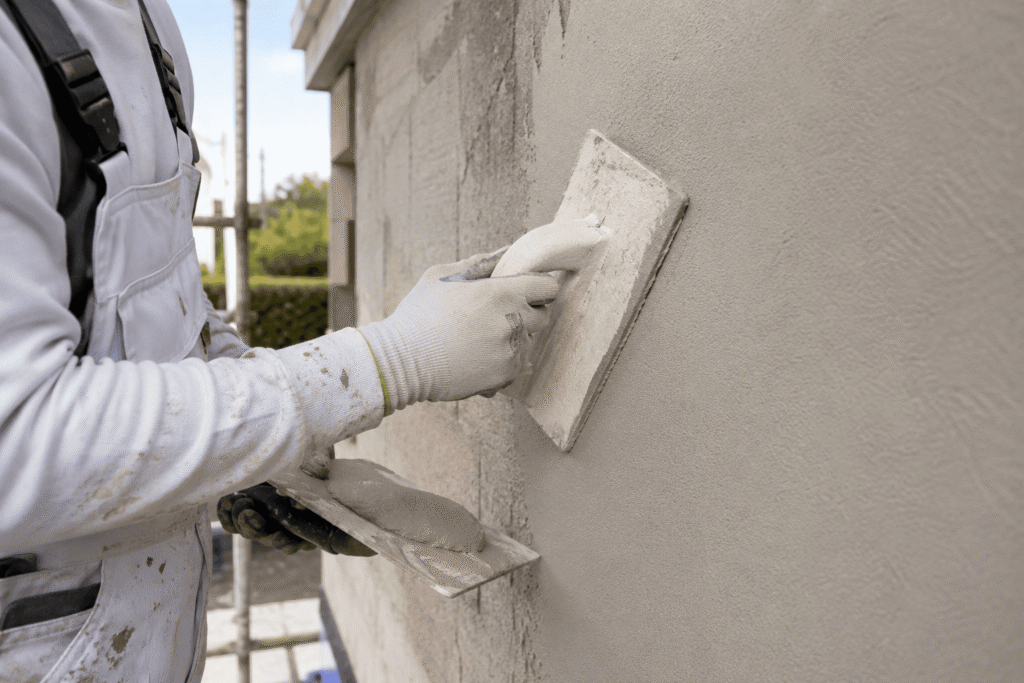
Beyond aesthetics, rendering provides a protective layer over the external walls of your home. A quality silicone or polymer render forms a watertight seal that prevents moisture from penetrating the masonry, which is particularly important in the UK’s wet climate. Damp is one of the most common buyer deterrents in the property market, and a rendered finish actively reduces that risk.
Modern renders, particularly self-cleaning silicone options, also reduce ongoing maintenance. Rather than repainting every few years or dealing with moss and algae creeping across the brickwork, homeowners get a finish that largely looks after itself. For buyers conscious of running costs, that matters.
How Much Value Can Rendering Add to Your House?
This is the question most homeowners actually want answered, and the honest answer is that it varies. Here is a realistic breakdown based on current UK market data and industry experience.
Standard professional rendering typically adds between 2% and 5% to a property’s value. When combined with External Wall Insulation (EWI), which improves the home’s energy performance at the same time, that figure can reach 5% to 10%. On a £220,000 property, that range sits between £4,400 and £22,000. Not an insignificant number.
That said, the return is not automatic. Property type matters. Detached and semi-detached houses tend to see the strongest uplift from rendering. For terraced properties or flats, the impact is more modest, partly because buyers have less exterior wall to consider and partly because the street context makes individual properties harder to differentiate.
Location matters too. In sought-after areas across the Midlands and beyond, where buyers are comparing multiple properties at similar price points, a polished exterior can genuinely push a home to the top of the shortlist. In more rural or budget-led markets, the percentage gain may be smaller, though the improvement in saleability still holds.
When Rendering Does Not Add Value
Rendering is not universally beneficial. On a well-maintained Victorian or Edwardian property where the original brickwork is in good condition and adds authentic character, covering it with render could actually reduce buyer appeal. Some buyers, particularly those specifically seeking period features, will see rendered brickwork as a problem rather than an asset.
Poor workmanship is perhaps the biggest risk. Renders applied without proper preparation, the wrong product for the substrate, or by someone without the right experience can crack, trap moisture, or simply look poor within a few years. A badly rendered house does not just fail to add value. It actively reduces it, because buyers and surveyors will see it as a liability.
Listed buildings and properties in conservation areas also require additional consent before any rendering work takes place, so always check with the local authority before proceeding.
Render Types Compared: Which One Is Right for Your Home?
Not all renders are the same product, and the choice you make has a direct impact on how long the finish lasts, how it performs in the UK climate, and how much maintenance it requires over the years.
| Render Type | Typical Lifespan | Breathable | Self-Cleaning | Best Suited For | Average Cost (per m²) | Maintenance |
| Cement Render | 7 to 15 years | No | No | Solid brick walls and modern builds | £25 to £45 | Medium |
| Silicone Render (K Rend) | 15 to 30 years | Yes | Yes | Most residential property types | £40 to £60 | Low |
| Lime Render | 20 to 30+ years | Yes | No | Period, heritage, and older properties | £45 to £70 | Low to Medium |
| Acrylic Render | 10 to 20 years | No | No | Budget conscious installations | £30 to £50 | Medium |
| Polymer Render | 15 to 25 years | Yes | No | Uneven or challenging wall surfaces | £35 to £55 | Low |
| Exterior Wall Coating | 20 to 25 years | Yes | Partial | Brick, render, and pebbledash exteriors | £50 to £80 | Very Low |
| External Wall Insulation (EWI) with Render | 25 to 30+ years | Yes | Yes (with silicone top coat) | Homes requiring improved energy efficiency | £80 to £150 | Very Low |
Costs are approximate 2025 UK figures. Final pricing depends on property size, access requirements, and location.
Why Silicone and Exterior Wall Coatings Lead the Market in 2026
Silicone render has become the go-to choice for most domestic rendering projects in the UK, and for good reason. It is breathable, which means moisture vapour can escape from the wall without being trapped, reducing the risk of damp from the inside out. It is also self-cleaning on exposed elevations, where rainwater naturally washes dirt down and off the surface.
Brands like K-Rend have become almost synonymous with silicone render, and many providers offer warranties of up to 25 years on properly installed systems. For homeowners who want a long-term solution rather than something that needs revisiting every decade, silicone is hard to beat. Advanced Wall Protection’s exterior wall coating service uses market-leading products specifically suited to the UK climate, with guaranteed results and professional application across Leicester, Leicestershire, Birmingham, and the Midlands.
If you are also wondering how long different render types typically last in real-world conditions, the detailed breakdown on how long rendering lasts is worth reading before making any decisions.
Rendering and Energy Efficiency: The Hidden Value Driver
Here is something that does not always get enough attention in conversations about rendering and property value: energy efficiency is now a genuine factor in what buyers will pay.
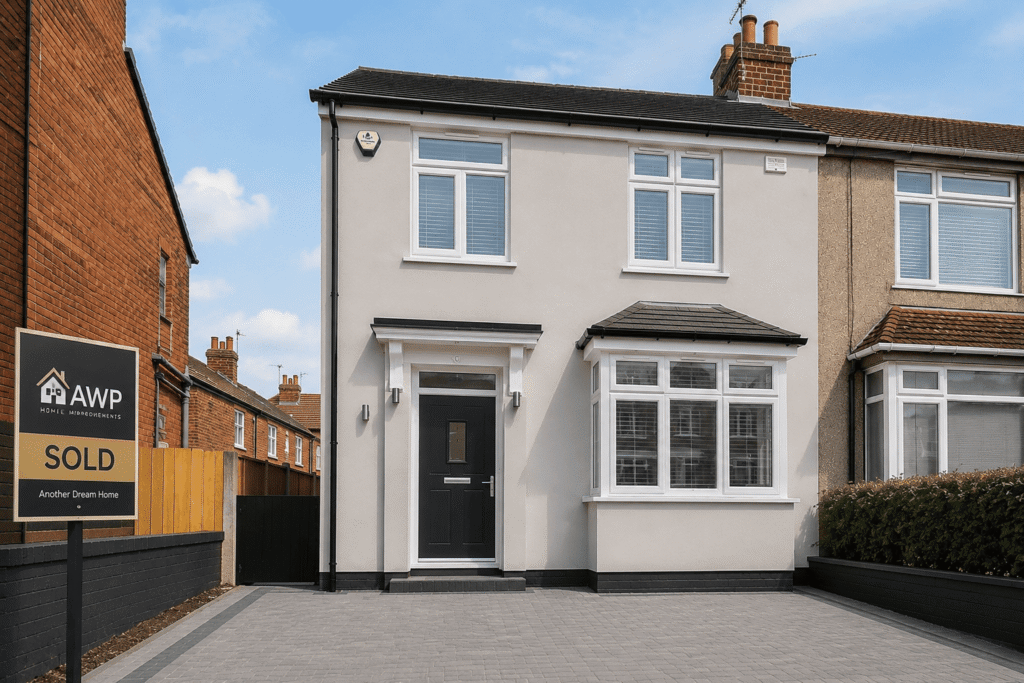
Since the introduction of mandatory EPC (Energy Performance Certificate) requirements, buyers and mortgage lenders are paying closer attention to a property’s energy rating. A home with a low EPC score can be harder to sell, harder to mortgage, and increasingly, harder to let. Improving that rating is no longer just about saving money on bills. It affects the marketability of the property itself.
Solid walls, which are common across older housing stock in Leicester, Birmingham, and the wider Midlands, account for up to 35% of total heat loss in a typical home. Bare brick or aging render offers minimal thermal resistance. Combining a quality render with External Wall Insulation changes that picture significantly.
An EWI system involves fixing insulation boards to the exterior walls and then applying a render finish over them. The result is a home that retains heat more effectively, reduces energy bills, and achieves a meaningfully better EPC rating. For buyers in 2025, a property with demonstrably lower running costs is a more attractive prospect, full stop. Advanced Wall Protection’s external wall insulation service covers the full process, from survey through to completion, with long-term guarantees on the finished system.
What Is the Difference Between Rendering and External Wall Insulation?
It is a question that comes up regularly, and the distinction is important. Rendering on its own is a protective and decorative coating applied directly to the existing wall surface. It improves weatherproofing and aesthetics but does not significantly change the wall’s thermal performance.
External Wall Insulation is a system where insulation boards are mechanically fixed to the wall first, and then a reinforced base coat and finish render are applied over the top. The insulation layer is what delivers the thermal performance gains. The render protects and finishes the system.
Cost-wise, a standard render sits at roughly £25 to £60 per square metre depending on the product, while a full EWI system runs from £80 to £150 per square metre. The higher upfront cost of EWI is usually offset by energy savings and a stronger impact on the property’s EPC rating and market value.
Beyond Rendering: What Else Protects and Adds Value to Your Home Exterior?
Rendering is one of the most impactful things a homeowner can do to the exterior of a property, but it works best as part of a wider approach to exterior protection. Here is how the other pieces fit together.
1. Roof Coatings
The roof is one of the first things a buyer notices and one of the first things a surveyor checks. Ageing, porous tiles lose their weatherproofing gradually, allowing moisture to penetrate over time. A professionally applied roof coating seals and waterproofs the existing tiles, extending the roof’s lifespan by 10 to 20 years and removing a significant concern from a buyer’s inspection.
Pairing a freshly rendered exterior with a protected roof gives the entire property a consistent, cared-for appearance that is difficult to put a price on but unmistakably visible to buyers. More detail is available on the roof coating and restoration service page.
2. UPVC Doors and Windows
Draughty or single-glazed windows are an immediate red flag for modern buyers. They signal higher energy bills, poor sound insulation, and potential security weaknesses. Replacing them with modern UPVC double or triple-glazed units improves the EPC rating, reduces heat loss, and gives the exterior a significantly more contemporary finish.
When combined with a rendered exterior, new UPVC installations create a coherent, updated look that is immediately appealing. The property looks finished, energy-efficient, and move-in ready. These are exactly the signals that justify a higher asking price in the current market. Advanced Wall Protection installs UPVC doors and windows across Leicester, Leicestershire, and Birmingham, designed to complement exterior rendering and coating work for a complete finish.
3. Damp and Mould Prevention
Damp is consistently cited as one of the most significant deterrents for property buyers in the UK. Even the appearance of a damp patch or mould staining on an interior wall can cause buyers to lower their offers or walk away entirely.
A well-applied render provides an excellent first line of defence against moisture ingress, but it is not always sufficient on its own. Existing damp problems need to be properly diagnosed and treated before any rendering work takes place. Applying render over active damp traps the moisture inside the wall, which makes the problem significantly worse over time.
Advanced Wall Protection carries out thorough surveys before any project begins, identifying existing damp, moisture issues, or substrate problems that need addressing first. The guide on does rendering stop damp explains this in more detail for homeowners concerned about moisture in their walls.
Why Professional Installation Makes or Breaks the Value Addition
This is where a lot of homeowners make a costly mistake. Rendering is a skilled trade. The difference between a professional finish and a poor one is not just aesthetic. It is structural. Incorrect product selection, inadequate surface preparation, or inexperienced application can result in cracks appearing within a few years, moisture being trapped behind the render, or an uneven finish that draws negative attention rather than positive.
Surveyors spot poor rendering quickly. Buyers see it. And the result is not just a failed investment. It is a property that is harder to sell and likely to generate lower offers because buyers factor in the cost of having it removed and redone.
Guarantees matter here. A reputable specialist will back their work with a written guarantee, typically ranging from 20 to 25 years for quality silicone render or exterior wall coating systems. That guarantee is not just reassurance for the current homeowner. It is a tangible asset that can be passed on to the buyer, providing genuine confidence in the quality and longevity of the finish.
A free survey before any work begins is equally important. It ensures the right product is specified for the right substrate, that existing issues are identified and dealt with first, and that the homeowner fully understands what the project involves and what to expect from the finished result. At Advanced Wall Protection, every enquiry starts with exactly that: a thorough, no-obligation survey carried out by experienced professionals across Leicester, Leicestershire, Birmingham, and the wider Midlands.
Ready to Add Real Value to Your Home?
Rendering is one of the most effective exterior improvements a UK homeowner can make, but only when it is done to a proper standard. At Advanced Wall Protection Ltd, the team brings decades of hands-on experience across Leicester, Leicestershire, Birmingham, and the Midlands, helping homeowners protect, insulate, and transform their properties with professional exterior wall coatings, rendering, External Wall Insulation, roof coatings, and UPVC installations, all backed by long-term written guarantees.
Book a free, no-obligation survey today and find out exactly what your home needs to look better, perform better, and sell for more.
Frequently Asked Questions About Rendering and Property Value
- Does rendering add value to a house in the UK?
Yes. Professional rendering can add between 2% and 10% to a property’s market value depending on the quality of the finish, the property type, and the local market. When combined with External Wall Insulation, the uplift is typically at the higher end of that range because the energy efficiency improvements make the property more appealing to buyers and mortgage lenders alike.
- How much does it cost to render a house in the UK in 2025?
Rendering costs vary depending on the product chosen. Cement render typically starts from around £25 per square metre, while silicone render ranges from £40 to £60 per square metre. A full External Wall Insulation system with a silicone render finish runs from £80 to £150 per square metre. Scaffolding, property size, and access requirements will all affect the final figure, which is why a site survey is always recommended before budgeting.
- Does rendering a house increase its EPC rating?
Rendering alone provides a modest improvement to wall insulation, but the biggest EPC gains come from combining rendering with External Wall Insulation. EWI can significantly reduce heat loss through solid walls, which in turn improves the property’s energy performance certificate rating, lowers energy bills, and increases buyer appeal in a market where running costs matter more than ever.
- Will rendering my house prevent dampness?
A professionally applied silicone or polymer render creates a watertight barrier that significantly reduces moisture ingress through exterior walls. However, any existing damp problems must be identified and properly treated before rendering begins. Applying render over active damp traps moisture inside the wall and makes the situation worse. A thorough pre-survey is essential to ensure the walls are in the right condition before any coating or render is applied.
- Does rendering work on all house types?
Rendering is well suited to most modern and post-war properties, particularly those with solid brick walls, mixed finishes, or aging pebbledash exteriors. It has the most pronounced effect on detached and semi-detached homes. However, it is generally not the right choice for properties with high-quality, visually appealing period brickwork, and it requires listed building consent or planning permission in conservation areas, national parks, and areas of outstanding natural beauty.