
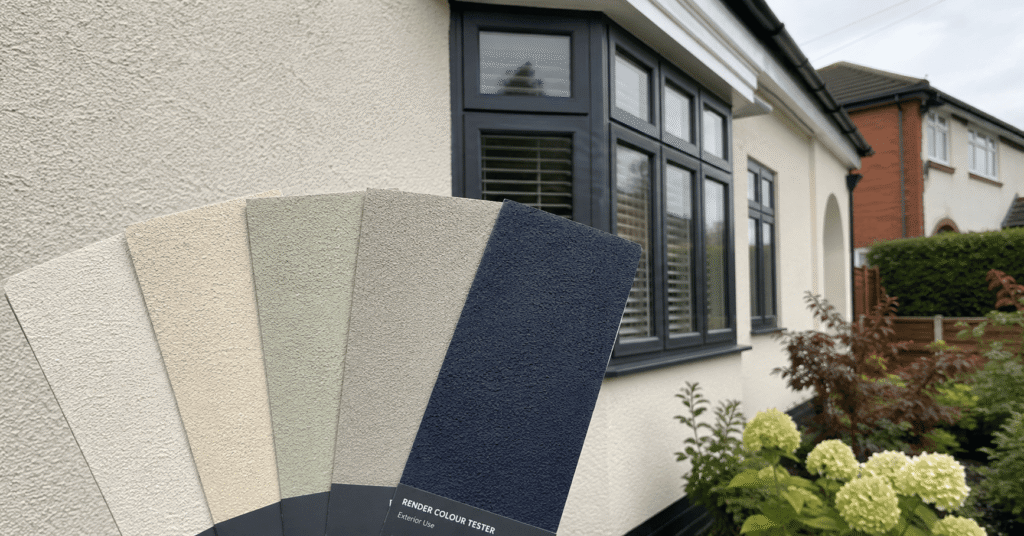
Picture a homeowner in Birmingham standing outside their freshly rendered house, colour card in hand, staring at 40 shades that all look vaguely similar in the showroom but somehow feel overwhelming when you are about to commit to one of them for the next two decades. It is one of the most common moments of paralysis in any exterior renovation project, and it is entirely understandable.
The exterior render is not like interior paint. It is designed to last 15 to 25 years, and the colour chosen defines the property’s kerb appeal for every single one of those years. According to FacadeColorizer’s 2026, which analysed 13,611 facade simulations between July 2025 and April 2026, 89% of homeowners start by exploring white shades but 73% change their initial colour choice after proper comparison. RAL 1013 Oyster White dominates with 28.7% of volume, yet the real story of 2026 is the shift away from cold whites and stark greys toward warmer, richer, and more nature-connected tones.
Professional rendering with the right colour choice can add 2% to 10% to a property’s market value. At Advanced Wall Protection Ltd, working with homeowners across Leicester, Leicestershire, Birmingham, and the Midlands, colour guidance is part of every conversation because the render colour chart UK homeowners choose from matters far more than most people realise when they start the process.
Why Render Colour Is a Bigger Decision Than Most People Expect
It Is a 15 to 25 Year Commitment
This is worth sitting with for a moment. Unlike interior walls that can be repainted over a weekend, exterior render colour is a long-term decision with real consequences. Self-coloured silicone renders from brands like K Rend and Weber have colour mixed all the way through the material, which means they never need repainting and the colour stays consistent for decades. Painted render systems from Dulux, Sandtex, and Crown sit on the surface and need refreshing every 5 to 8 years. Both are excellent systems, but the choice affects not just the initial look but the long-term maintenance commitment and cost.
The UK Light Factor Almost Nobody Talks About
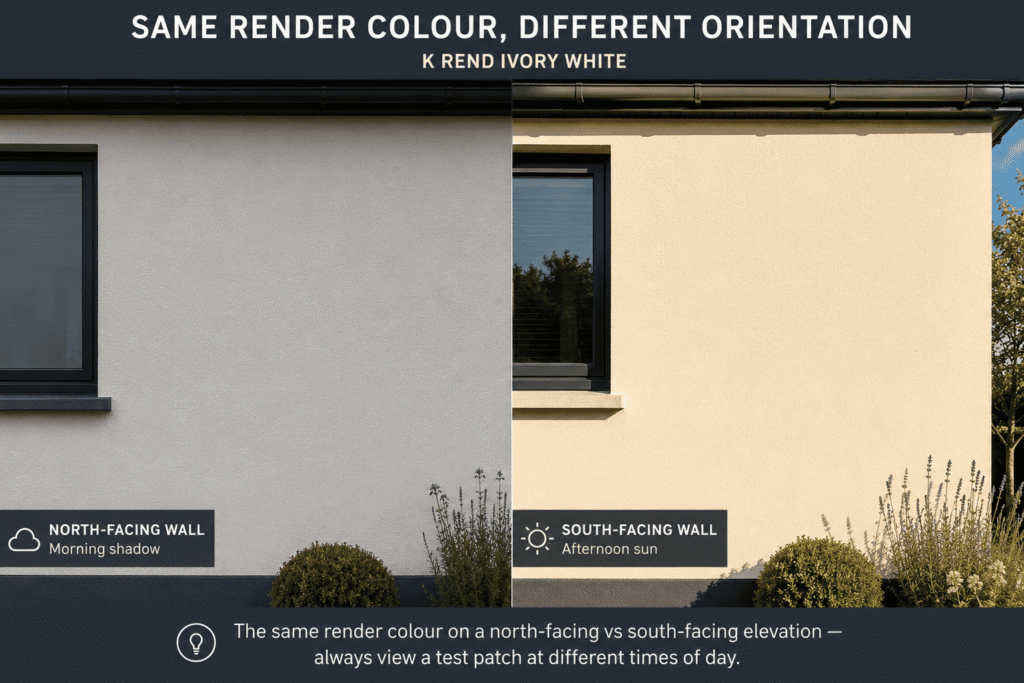
UK daylight is predominantly diffused and overcast, particularly across the Midlands in autumn and winter. This changes how colours read on a large exterior surface in ways that catch homeowners completely off guard. A shade that looks fresh and warm on a sample card in a merchant’s showroom can look flat, washed out, or even slightly cold on a 100m² facade on a grey Leicester afternoon. North-facing walls appear consistently darker and cooler than south-facing ones, so the general rule is to choose one shade lighter than instinct suggests. Always test a 1m² patch on the actual wall and view it at different times of day before committing to the full project.
Conservation Areas and Planning Rules
This is a practical constraint that catches many homeowners by surprise. Properties in conservation areas across Birmingham, Leicester, and throughout Leicestershire may be subject to restrictions on exterior colour changes, regardless of whether the render itself is permitted development. Heritage officers are significantly more likely to approve chalky off-whites, natural earth tones, and muted greens than stark modern whites or bold contemporary blues. Always check with the local planning authority before ordering materials. Advanced Wall Protection Ltd handles all planning checks as part of every free survey.
What Is Actually Trending in 2026
- Warm Neutrals: The Comfortable, Confident ChoiceWarm neutrals are comfortably the most popular render colour category across the UK in 2026, and the shift is subtle but significant. Homeowners are moving away from flat magnolia and pure cream toward shades with a hint of pink, ochre, or grey that give the exterior more depth and hold their warmth better in low light.Dulux Natural Calico has become a standout favourite, now outselling Magnolia on several trade merchants’ charts. It is a gentle warm cream with enough depth to avoid looking washed out on overcast Midlands days, and it pairs beautifully with anthracite grey UPVC windows and doors, which is 2026’s most popular exterior colour combination. K Rend Ivory White (KR009) sits in a similar space as a self-coloured silicone render, warmer than Polar White but cooler than Cream, and it suits the majority of UK housing stock without ever needing a repaint. Sandtex Cornish Cream brings a richer, buttery warmth with the practical advantage of a formulation that can be applied at temperatures as low as 2°C, making it genuinely usable through most of the British year.For period properties and conservation areas where colour accuracy matters to planning officers, Little Greene Slaked Lime (105) is the go-to choice. Its chalky, traditional off-white references limewash tones that heritage officers respond to far more positively than modern stark whites
2. Contemporary Greys: Warmer, Not Colder
Grey render is not going anywhere, but the cold, bluish industrial tones that defined the 2020s are making way for warmer greige and stone shades. Sandtex Plymouth Grey is one of the most versatile options on the market, working equally well on a 1930s semi in Leicestershire as it does on a modern new-build in Birmingham. K Rend Pewter Grey (KR015) is consistently popular on extensions and self-builds, delivering a completely uniform self-coloured finish with no brush marks or roller patterns. For homeowners who want real impact, Dulux Trade Weathershield Chic Shadow reads as near-charcoal on north-facing walls but lifts to a sophisticated mid-grey in direct sunlight, and it pairs sharply with crisp white window frames.
- Greens and Earth Tones: The Fastest Growing CategorySage, olive, and terracotta shades are 2026’s fastest-growing exterior colour trend, driven by the biophilic design movement and a growing desire to blend homes with their natural surroundings rather than standing apart from them. Little Greene Sage Green (80) is a muted, grey-green that works particularly well in suburban Midlands settings and rural Leicestershire, where planning officers tend to favour tones that connect with the landscape. Sandtex Sandstone brings a warm golden-buff quality that references natural Bath and Cotswold stone, giving rendered walls the appearance of natural stonework at a fraction of the cost. It pairs exceptionally well with dark green or black UPVC window frames.
- Dulux Rhythm of Blues: The 2026 Colour of the Year|Dulux made headlines in late 2025 by naming not one but three indigo-inspired blues as its Colours of the Year for 2026, a collection called Rhythm of Blues. For the first time, Dulux created dedicated exterior palettes alongside the interior range, signalling that blue is no longer just a front door colour. Dulux Mellow Flow is an airy, pale blue that adds Scandinavian freshness to rendered semis and bungalows and is subtle enough to avoid planning objections in most areas. Dulux Slow Swing is a deeper, more dramatic dark blue, best used as an accent on a front gable or porch rather than a full facade, and it pairs beautifully with K Rend Ivory White or Sandtex Cornish Cream for a striking two-tone effect.
The Render Colour Chart UK: 12 Trending Shades for 2026
Here is a practical render colour chart covering the 12 shades genuinely gaining ground across UK homes in 2026, drawn from the latest ranges at Dulux, Sandtex, K Rend, and Little Greene.
| Colour Name | Brand | Category | Best Suited For | Key Feature |
| Natural Calico | Dulux Weathershield | Warm Neutral | Most property types | Outselling Magnolia, pairs with anthracite windows |
| Ivory White KR009 | K Rend | Warm Neutral | All UK housing stock | Self-coloured, never needs repainting |
| Cornish Cream | Sandtex 365 | Warm Neutral | Northern and Midlands climates | Applicable at 2°C, rich buttery warmth |
| Slaked Lime 105 | Little Greene | Heritage Neutral | Period and conservation properties | Heritage officer approved, chalky off-white |
| Plymouth Grey | Sandtex | Contemporary Grey | Any property style | Top seller, Ultra Smooth and Textured finish |
| Pewter Grey KR015 | K Rend | Contemporary Grey | Modern extensions and self-builds | Self-coloured, completely uniform finish |
| Chic Shadow | Dulux Weathershield | Deep Grey | Statement exteriors | Near charcoal north-facing, mid-grey in sunlight |
| Vermont Grey | Sandtex | Contemporary Grey | Bold without committing to near-black | One of Sandtex’s five most popular nationally |
| Mellow Flow | Dulux Weathershield | Blue | Semis and bungalows | Airy pale blue, Scandinavian freshness |
| Slow Swing | Dulux Weathershield | Blue | Accent gables and porches | Dark blue, pairs with Ivory White for two-tone effect |
| Sage Green 80 | Little Greene | Green and Earth | Rural and suburban settings | Muted grey-green, planning officer friendly |
| Sandstone | Sandtex | Earth Tone | Rural and period properties | Golden-buff, pairs with dark green or black frames |
Practical Colour Selection: What Midlands Homeowners Need to Consider
- Orientation and Light
North-facing walls receive significantly less sunlight than south-facing ones, and colours appear darker and cooler as a result. A shade that looks like a warm mushroom on a colour card can read as a flat, cold grey on a north-facing elevation in January. The practical rule is to choose one step lighter than instinct suggests for any north-facing wall, and to always view a test patch at different times of day before committing to the full job.
- Surrounding Materials
Render colour does not exist in isolation. It needs to work with the roof tile colour, any exposed brickwork on the plinth or chimney, the boundary walls, and the front door. Grey render against a red brick plinth can look jarring and unfinished without careful planning. Sandstone rendered against warm clay roof tiles creates a cohesive, natural feel. Testing the combination before ordering 25 bags of coloured render is not optional, it is essential.
- Conservation Areas and Planning
Many streets across Leicester and Birmingham sit within or near conservation areas where exterior colour changes require approval from the local planning authority. Heritage-friendly shades like Little Greene Slaked Lime and Dulux Natural Calico tend to receive approval far more readily than bold contemporary choices. Advanced Wall Protection Ltd checks all planning requirements as part of the free survey, so homeowners are never caught out mid-project.
Colour Is Only Part of the Story
Choosing the right render colour is important, but it is the system behind the colour that determines how it performs, how long it lasts, and what value it ultimately adds to the property.
High-performance silicone render systems are self-cleaning, breathable, crack-resistant, and built to last 15 to 30 years in the UK climate. Damp prevention, waterproofing, and mould resistance are built into the system rather than being an afterthought. For pre-1920 solid wall properties across the Midlands, breathable lime or silicone render systems are essential because they allow the wall to manage moisture naturally without trapping it behind a non-permeable surface.
Combining a new render colour with External Wall Insulation is one of the smartest upgrades available to Midlands homeowners. It addresses heat loss, damp, condensation, and exterior appearance in a single project, and the energy savings, lower heating bills, and improved EPC rating add measurable value alongside the visual transformation.
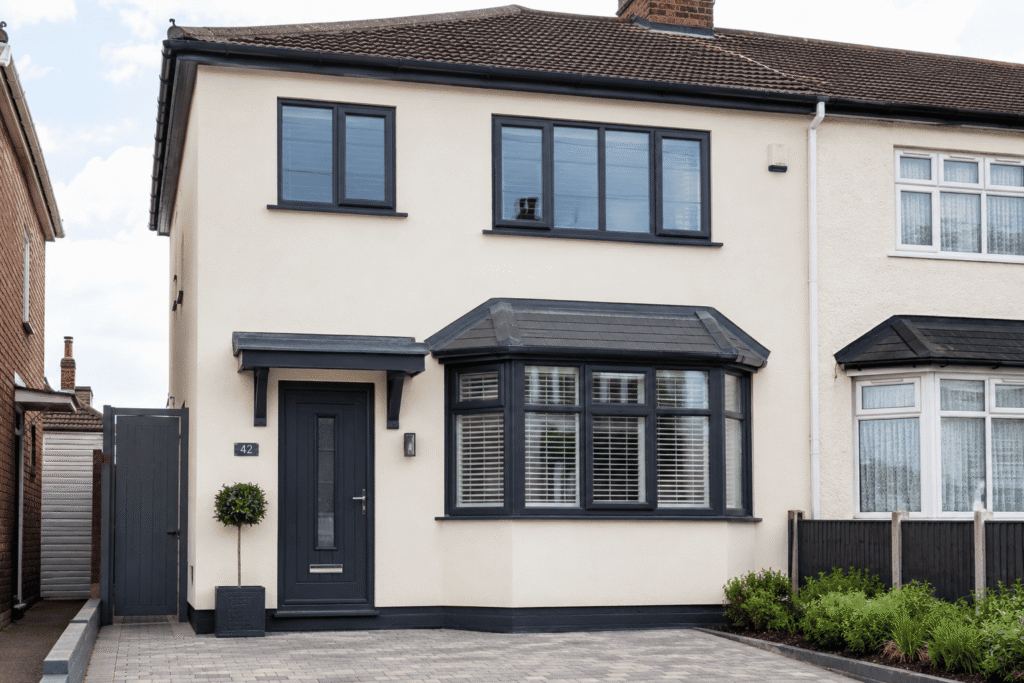
Render colour choice must also be considered alongside roof tile colour, UPVC door and window frame colour, and boundary wall materials. Anthracite grey UPVC windows and doors pair with almost every 2026 trending render colour and have become the default pairing for a reason. Dark green or black frames alongside earthy render tones are the Midlands’ fastest growing combination this year. Roof coatings in complementary tones complete the cohesive exterior design that defines the 2026 aesthetic and protect the full weather envelope of the building at the same time.
A written workmanship guarantee from an experienced installer ensures the finish performs as intended for years to come. Advanced Wall Protection Ltd provides expert colour guidance, system recommendations, and a no-obligation assessment as part of every free survey across Leicester, Leicestershire, Birmingham, and the Midlands.
The Bottom Line
The 2026 render colour story is a move toward warmth, nature, and longevity. Homeowners across the Midlands are stepping away from cold greys and stark whites and choosing shades that feel welcoming, complement their surroundings, and age gracefully over the 15 to 25 year lifespan of the render system beneath them.
Getting the colour right matters, but getting the system right matters more. The best colour in the world applied over poor substrate preparation or the wrong render system will not perform the way it should. Professional advice, proper assessment, and experienced installation are what turn a good colour choice into a result that adds genuine, lasting value.
Book a free survey with Advanced Wall Protection Ltd today. Colour guidance, system recommendations, and an honest assessment of what your property needs are all part of the conversation. Proudly serving homeowners across Leicester, Leicestershire, Birmingham, and the Midlands.
Frequently Asked Questions
1. What are the most popular render colours for UK homes in 2026?
Warm neutral shades remain the most popular choice, including tones like cream, soft ivory, and natural beige. Earthy greens, terracotta inspired colours, and muted blue-grey palettes are also becoming increasingly popular across modern UK exterior designs.
2. What is the difference between self-coloured render and painted render?
Self-coloured render has pigment built directly into the material, reducing the need for repainting and lowering long term maintenance. Painted render uses exterior masonry paint over a base coat and usually requires repainting every few years depending on weather exposure.
3. Can render colour be changed in a conservation area?
Sometimes, but approval may be required. Homes located in conservation areas or listed properties often need permission from the local planning authority before exterior colour changes can be made.
4. Which render colours work best with anthracite grey windows?
Warm neutral shades such as cream, ivory, off-white, and light beige pair especially well with anthracite grey windows and doors, creating a modern but balanced exterior appearance.
5. Does render colour affect home protection and durability?
To some extent, yes. Darker colours absorb more heat and may show weathering differently over time. However, the overall protection mainly depends on the quality of the render system itself rather than the colour alone. Homeowners can explore suitable render options through Advanced Wall Protection Ltd.