
The Condition Before Work Began
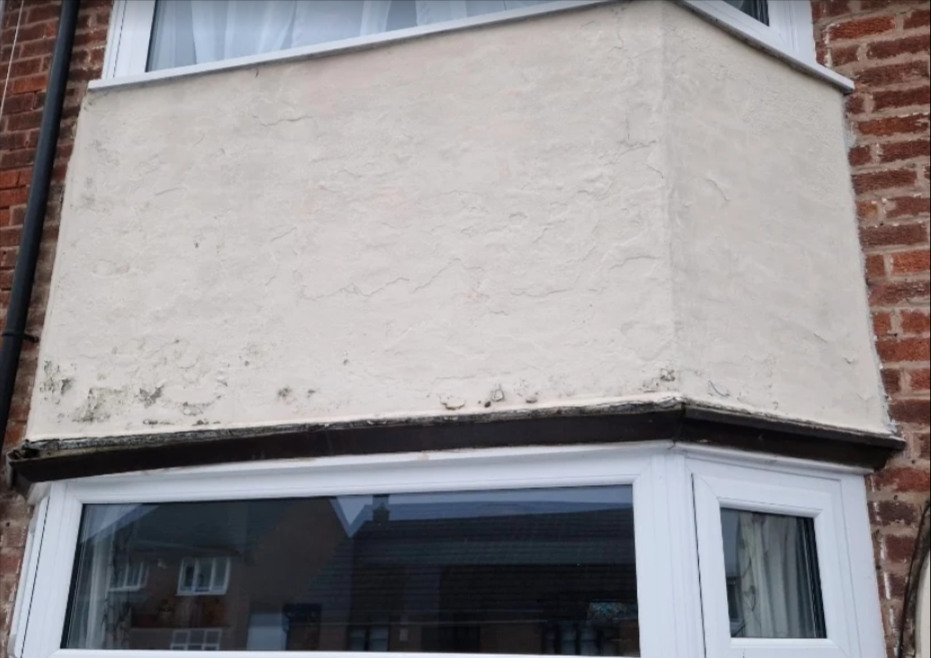
The existing render on the bay window showed a number of problems that are common in older UK properties. The surface had developed widespread cracking and was lifting away from the substrate in several areas. Along the lower section of the bay, directly above the window frame, algae had established itself in the damp and damaged areas, leaving dark green and black staining across the render face.
The lead flashing at the base of the bay had also deteriorated, meaning water ingress was a likely contributing factor to the render failure. Without addressing the flashing at the same time as the render, any new surface coating would be at risk of the same problems recurring within a short period.
In terms of visual impact on the property, the bay window is one of the most prominent features on the front elevation. Damaged render in this location affects the overall appearance of the house considerably, particularly on a street of similar terraced properties where condition is easily compared.
Work Carried Out
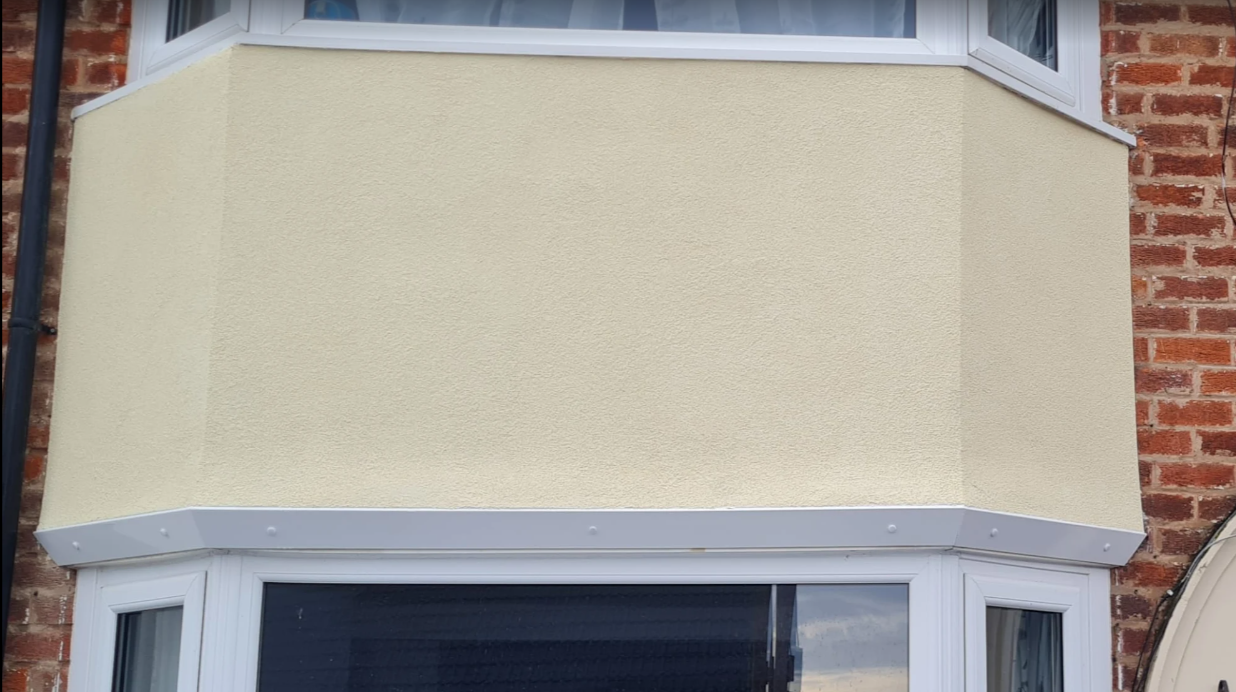
The scope of work on this project covered the following: removal of the failed render back to the substrate, preparation and priming of the surface, application of a base coat render, and finishing with a through-coloured topcoat in an off-white / cream tone. The lead flashing at the base of the bay was also replaced as part of the same visit, ensuring a weathertight finish at the junction between the render and the window frame below.
The replacement flashing was formed and fitted in white-coated aluminium, which ties visually with the uPVC window frames and provides a neat, finished appearance at the base of the render panel.
The Finished Result
The completed render presents a clean, uniform surface across the full face of the bay window. The texture is consistent throughout, and the colour sits well against the existing red brick of the surrounding elevation. The new flashing detail at the base provides a clear, defined line between the render and the window frame below.
The property now has a considerably improved appearance at street level. More practically, the render is now watertight, structurally sound, and no longer at risk of progressive failure caused by moisture penetration.
Why Bay Window Render Fails on UK Terraced Houses
Bay windows on UK terraced properties are exposed to rainfall from three directions and tend to hold moisture for longer than flat wall sections. This makes the render on bay windows particularly susceptible to the following issues:
Cracking caused by thermal movement. Render expands and contracts with temperature changes. Over time this causes fine cracks to develop, which allow water to penetrate beneath the surface.
Algae and moss growth. Where render retains moisture, green or black biological growth will establish itself. This is not merely a cosmetic issue as algae accelerates surface breakdown.
Failed or missing flashing. The junction between the render and the top of the bay window below is a common point of failure. Where the flashing has corroded, lifted, or been improperly installed, water tracks behind the render and causes delamination.
Addressing these issues as a combined package, rather than treating symptoms individually, is the most reliable way to achieve a lasting result.
Frequently Asked Questions
If the render is hollow when tapped, delaminating in multiple areas, or showing cracks wider than hairline, patching is unlikely to provide a lasting solution. Patch repairs on render that has failed across the substrate tend to fail at the edges of the patch within a short period. A full strip and replacement is generally the more cost-effective approach once deterioration has reached this stage.
In most cases, yes. If the existing flashing has corroded or is poorly sealed, applying new render over it will result in water tracking behind the new surface. The junction between render and the window frame or roof below is one of the most common points of failure, and dealing with it as part of the same project avoids having to revisit the work.
A correctly specified and applied render system on a bay window, with properly sealed junctions, should last in excess of 20 years under normal UK weather conditions. The longevity depends on the render product used, the preparation of the substrate, and whether all water entry points have been dealt with at the time of application.
In most cases it is possible to closely match an existing render finish in terms of both texture and colour. On projects where only a section of render is being replaced, we discuss colour matching with the homeowner at the survey stage. Where the existing render is weathered, an exact match to the original shade may not be achievable, but a close approximation is generally possible.
In most circumstances, re-rendering a bay window on a residential property does not require planning permission, as it is considered maintenance of the existing external appearance. However, if the property is within a conservation area or is a listed building, different rules apply and it is advisable to check with your local planning authority before work begins.
A bay window render replacement of the type shown in this case study is typically completed within one to two days, depending on the size of the bay, the drying time required between coats, and the weather conditions on the day of application. Your surveyor will confirm the expected duration at the time of your quote.
Advanced Wall Protection Ltd carries out external render repairs, replacement render systems, and associated external wall work on residential properties across the Midlands. Work is carried out directly by our own operatives. If you have a bay window or other section of render that requires attention, contact us for a survey and written quotation.